
What a time to be AI. Not only did it grow up and get a job, but it also forgot to go after unpaid labour like cooking, cleaning, and caregiving, which would have been nice. Until then, many of us will be training AI to take more work off our plates and to protect our lunch money at all costs.
When I started at the bank, a couple of content designers were sprinkled across teams made up of about 5-12 product designers. I turned to AI because I was a content team of one. As the future of content design trends towards AI-generated content, many of us who spent our time making computers sound like humans are now tweaking our writing to sound like a kind and caring computer. Weird.
While we prepare ourselves to use generative AI and large language models to accelerate content ideation and optimize UX copy—thereby delivering scalable, user-centric experiences that influence design decisions in fast-paced, cross-functional environments (you’re welcome, recruiters and search engines)—here’s what that actually looks like in practice.
Restructuring and formatting content
Scenario:
A product designer is working on a new document uploading tool. There’s a long list of descriptions for about 30 types of documents. When a user selects the type of document they will be uploading, the description will appear on the screen to outline what’s required.
Example of one of the descriptions:
Your Marriage certificate/proof of marriage must:
- Include a valid marriage certificate or proof of marriage that clearly displays your full name, your spouse’s full name, and the date of marriage. It must not be expired.
Revised version:
Your marriage certificate/proof of marriage must:
- Clearly display your full name, your spouse’s full name, and the date of marriage.
Value that a content designer brings
After using AI to reformat the laundry list of documents, I edited the entire list line by line, removing incorrect information undetected by AI. For instance, a marriage certificate does not have an expiry date. (Bugged a few people to double-check this.) AI may be a great wordsmith, but a content designer uses human judgement to make sure those words are true.
Brainstorming and refining copy
Scenario:
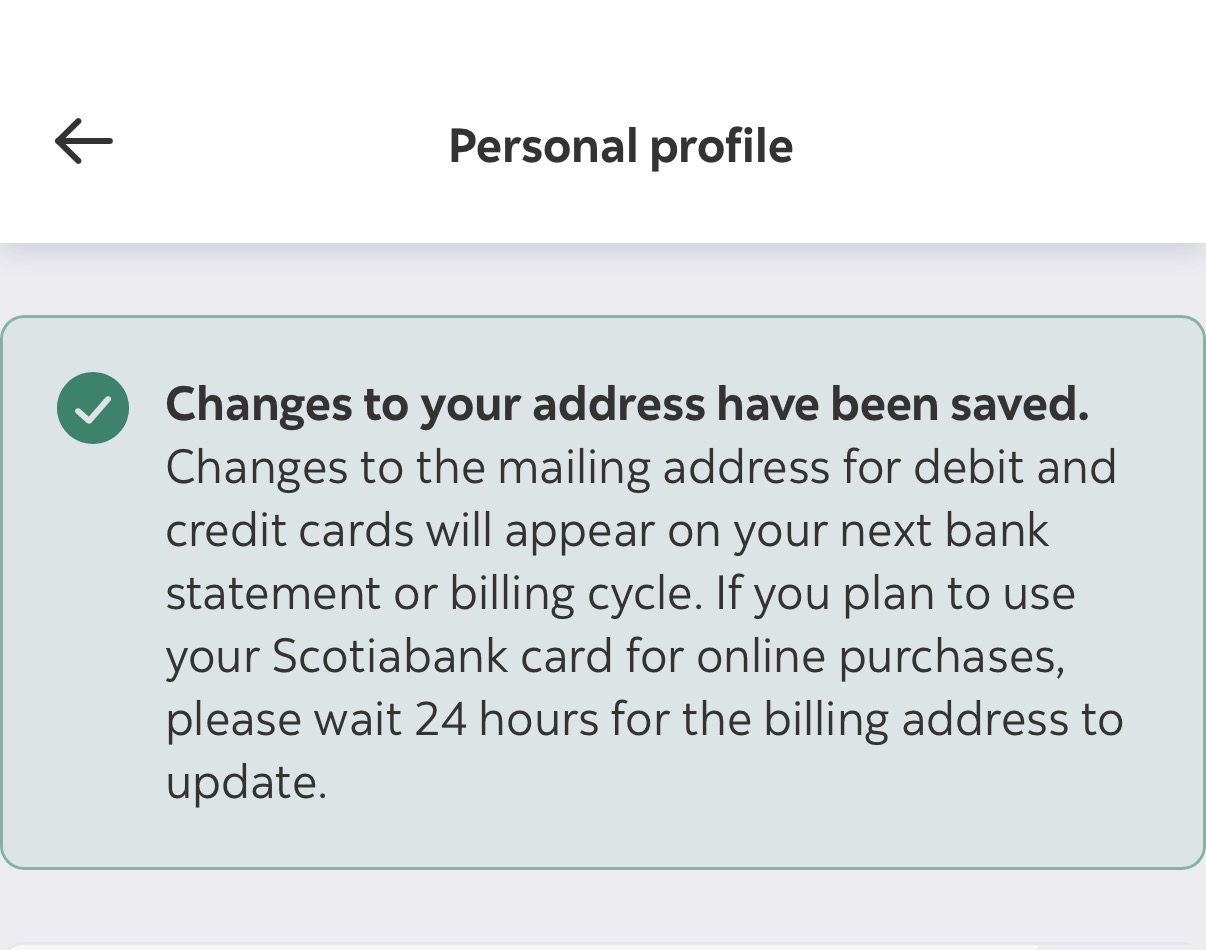
A product designer is working on a new feature that allows customers to edit their address under their profile settings. Users will be able to update their home address, mailing address, and business address for each and every bank account they have.
Original success message after an edit:
Your home, mailing, and account mailing addresses have been updated.
Recommended alternatives:
- Your address has been updated.
- Changes to your address have been saved.
- Your changes were saved.
Value that a content designer brings
I use AI to rephrase sentences and generate ideas. I may be:
- Evaluating AI’s suggestions and increasing the number of alternatives
- Determining which phrase is the best match, can be used in other scenarios, or most appropriate for A/B testing
- Editing copy for style, consistency, tone of voice, and inclusive language
- Rewriting the message entirely if AI content is missing the context (happens a lot)
- Checking whether the screen or other screens present conflicting information
In this case, after changes to an address are saved, the update could take 24 hours to show up on a statement or bill. The success message and description should work together. Without context, users might run into problems through no fault of their own.
 Mimi Szeto